


Maximizing Desk Fitness with the BestGod Balance Trainer Board
In today’s sedentary work environment, small movements matter. The BestGod Wood Wobble Board acts as an under-desk trainer with built-in resistance bands, inviting you to engage your core, stabilize your spine, and circulate energy during long hours in front of a screen. This article walks you through how to choose, use, and progressively train with the BestGod Balance Trainer Board to turn desk time into a productive, healthier routine.
What a balance trainer board does for your body
- Engages the core muscles continuously as you balance, helping to build stability for daily activities.
- Promotes better posture by encouraging upright alignment and active hip and shoulder stabilizers.
- Relieves desk-related fatigue by alternating movement with stiffness-prone regions like the lower back and neck.
- Integrates resistance bands to add upper-body activation without taking extra space.
- Offers a compact solution suitable for home offices, shared spaces, or compact workstations.
Key features to consider when choosing a balance trainer board
While the BestGod Balance Trainer Board is designed to be comprehensive, understanding the core features helps you compare options and select the right fit for your routine.
- Stability and surface: A stable, non-slip surface reduces the risk of tipping when performing dynamic moves.
- Board angle and range: A moderate incline supports gentle balance challenges; steeper angles increase difficulty.
- Resistance bands: Integrated bands or compatibility with portable bands let you add upper-body work without extra gear.
- Portability: A lightweight, compact design facilitates use in small workspaces and under desks.
- Durability: Quality materials withstand daily use and resistance from bands and posture shifts.
- Ease of setup: Quick assembly and simple storage encourage consistent use throughout the week.
Getting started: setup, safety, and first steps
Before you begin, find a stable floor surface in a quiet area of your workspace. If you have a standing desk or a high chair nearby, clear the area to avoid collisions during balance routines. Begin with a gentle approach to understand how your body responds to the unstable surface and resistance bands.
- Place the board on a flat, non-slip surface. Check that the bands are attached securely and not frayed.
- Wear supportive footwear or stand barefoot if you prefer a better grip on the board’s surface.
- Start with light engagement: stand with feet hip-width apart, knees slightly bent, core engaged, shoulders relaxed.
- Perform slow, controlled movements at first to gauge balance and comfort level. Pause if you feel dizziness, pain, or sharp discomfort.
As you progress, gradually increase duration and introduce small variations. The goal is to train stability and endurance without compromising form. If you have a history of knee, ankle, or back issues, consult a clinician before adding new balance-based exercises to your routine.

Exercises to build a practical balance routine
Below is a practical progression you can adapt for a short work-break session or longer coaching-friendly workouts. Start with 5–8 minutes a day and build toward 15–20 minutes, several times per week.
- Basic stance holds: Stand with feet shoulder-width apart, knees softly bent, and hold for 30–60 seconds. Focus on breath and posture.
- Heel-to-toe shifts: Step one foot forward, then the other, maintaining balance. Repeat 10–12 times each side.
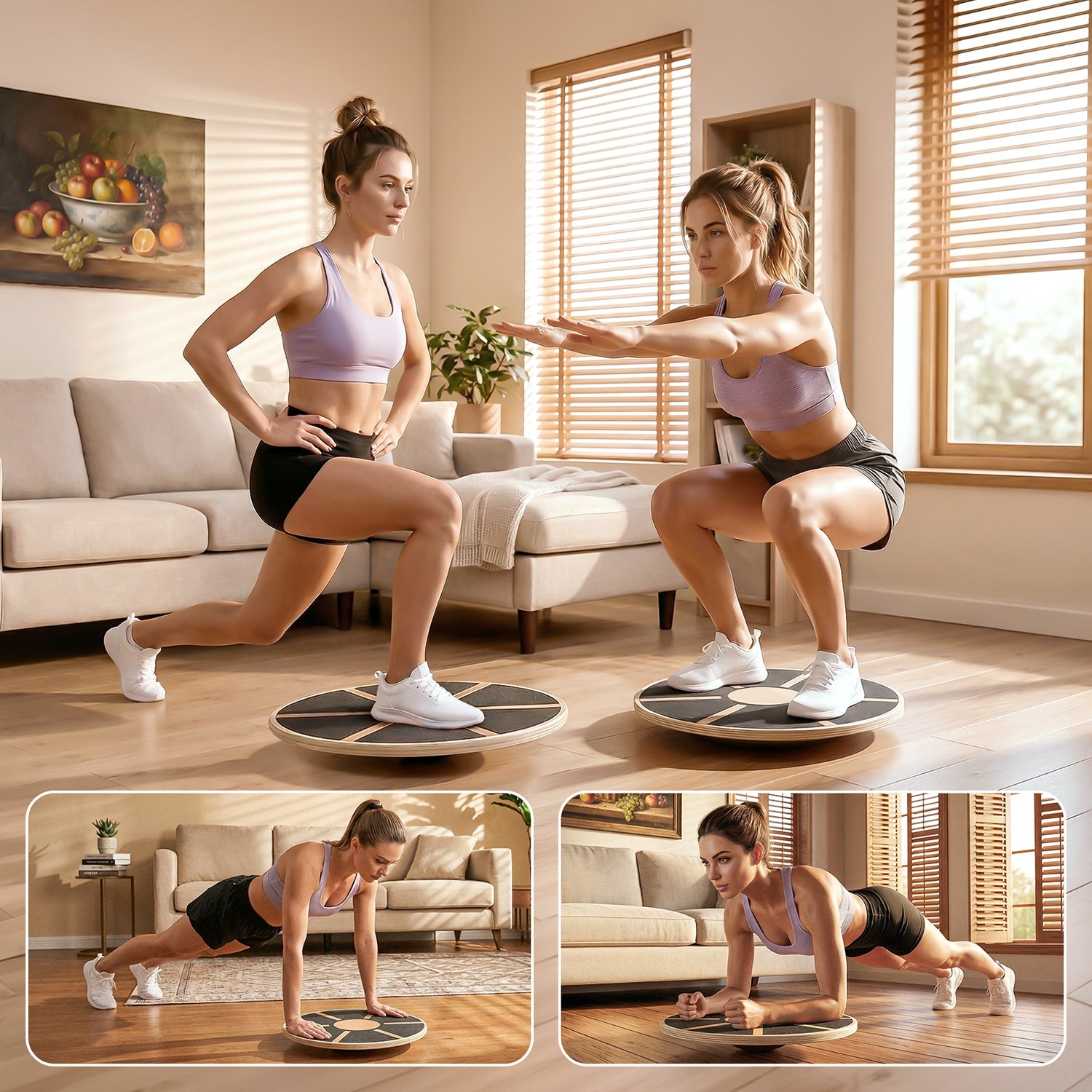
- Mini squats: Perform shallow squats on the wobble board to engage the glutes and quads, 12–15 reps.
- Lateral reaches with bands: Attach resistance bands to the board or hold them in your hands to perform side presses and torso rotations, 8–12 reps per side.
- Single-leg balance: Lift one foot slightly off the ground and hold, 15–30 seconds per leg. Use a wall for light support if needed.
- Step-ups and escalations: If space allows, perform step-up motions onto a small platform while maintaining balance on the board, 8–12 reps per leg.
- Low-impact rows: Sit or stand and pull a resistance band toward your torso while keeping your hips square and core engaged.
- Push-up variations: Place hands on the board and perform gentle push-ups, focusing on maintaining full-body alignment.
- Dynamic rotations: Hold the board steady with one hand on the rim and rotate your torso gently toward the opposite side, then switch sides.
Programming and progression for real-world results
Consistency matters more than intensity for beginners. Plan simple progressions that gradually increase difficulty while protecting joints. A good structure might look like this:
- Weeks 1–2: 3 sessions per week, 5–10 minutes, basic balance holds and gentle squats.
- Weeks 3–4: 4 sessions per week, 12–15 minutes, add resistance bands and more dynamic variations.
- Weeks 5–6: 15–20 minutes, include compound movements (rows, push-ups) and single-leg work in a controlled flow.
Keep a simple log: note the duration, intensity, and any sensations of fatigue or relief. Use the diary to identify what makes you feel steadier and more energized during work tasks. Listen to your body; if a move triggers knee or back discomfort, pause and adjust the depth, tempo, or range of motion.
Safety tips and maintenance
Balance training can be beneficial, but improper use may lead to injuries. Here are safety tips to keep you on track:
- Warm up with light mobility work for hips, ankles, and shoulders before stepping onto the board.
- Use steady, controlled movements rather than quick, jerky actions.
- Stay aware of your surroundings to avoid hitting the desk, chair, or computer monitor.
- Inspect the surface and bands weekly for wear and tear. Replace parts as needed.
- Hydrate and take breaks to prevent fatigue or dizziness.
Who benefits most from a balance trainer board?
This tool is well-suited for office workers, remote employees, and anyone who spends long periods seated. It can help people who experience knee or lower back discomfort by encouraging micro-m movement, improving stabilization, and supporting healthier posture. Athletes or fitness enthusiasts may use it as a compact warm-up or mobility aid in small spaces.
Care, storage, and longevity
Store the balance trainer board in a dry place away from direct heat or sunlight. Clean the surface with a damp cloth and mild soap after sweaty sessions. If bands were included, keep them away from sharp objects and handle them gently to preserve elasticity. Regular maintenance helps ensure consistent performance for months to come.
Conclusion: turning desk time into productive movement
Integrating a balance trainer board into your workday can transform how you approach productivity and well-being. By choosing the right board, learning safe setup, and following a scalable progression, you can build core strength, improve posture, and reduce desk fatigue without leaving your workspace. The BestGod Balance Trainer Board offers a compact, versatile solution for people who want effective movement between tasks, quick recovery during breaks, and a practical path toward healthier habits.

Leave a comment
This site is protected by hCaptcha and the hCaptcha Privacy Policy and Terms of Service apply.