


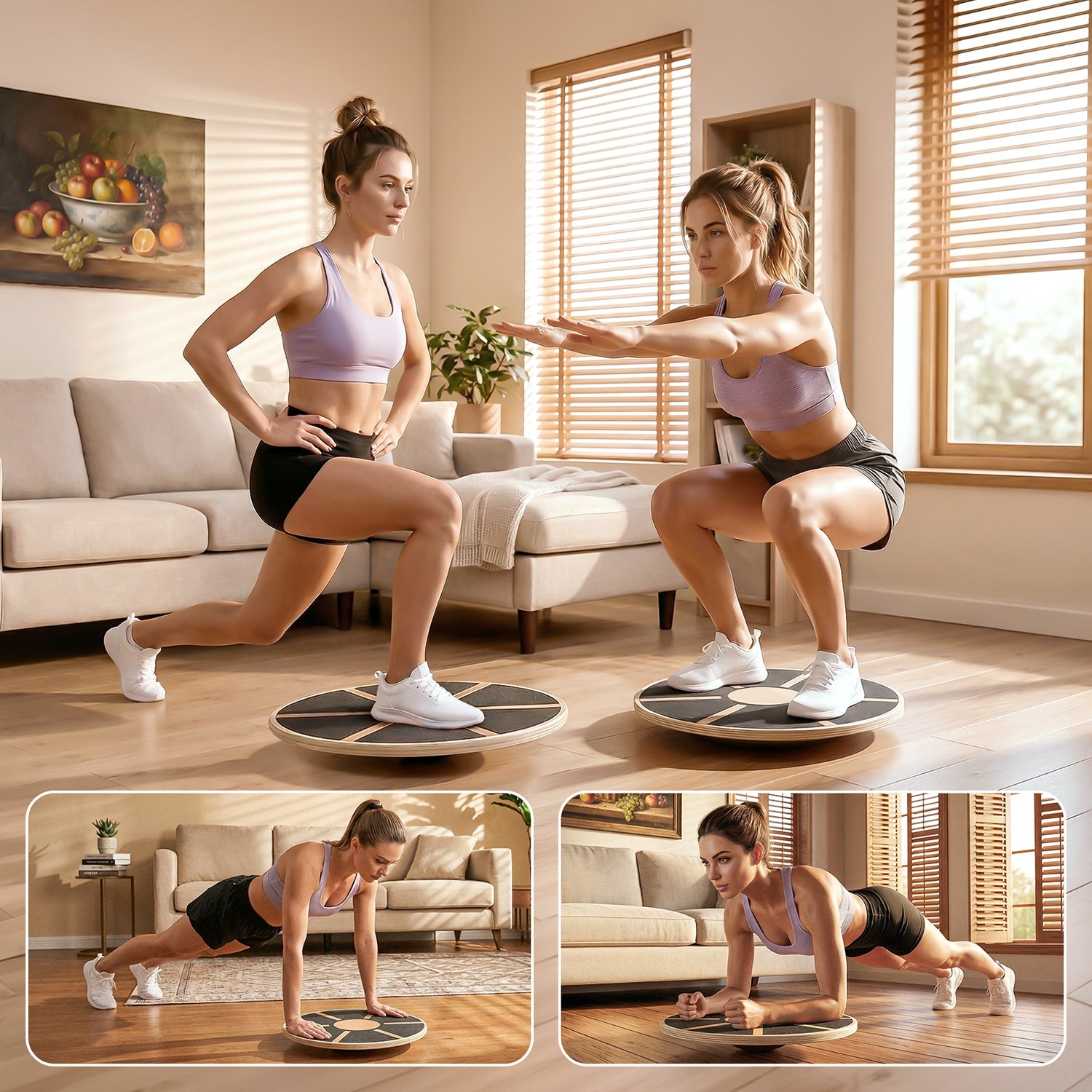
A wooden balance board looks simple on the floor, but the first few seconds on one can expose weak links fast: shaky ankles, sleepy core muscles, and habits that hide on a stable surface. That is exactly why balance board workouts have become a practical home training tool for people who want better control, stronger posture, and more efficient movement. The real benefit is not just standing still without wobbling; it is learning how to use an unstable surface to create stronger midline support, cleaner movement patterns, and a more responsive body.
What Balance Board Workouts Do for Your Body
Unstable-surface training asks the body to make constant micro-adjustments, which challenges balance, coordination, and the deep muscles that support the trunk.
A balance board usually rocks in one direction, while a wobble board allows multi-directional movement, so the wobble board is typically less predictable and a little harder to control. Both tools can improve balance and spatial awareness, but the training effect is slightly different: one is more linear, the other more freely unstable. Over time, that demand can support better posture, steadier movement, and more control during lifting, walking, and sports.
How to Use a Balance Board Safely
First sessions should happen near a wall, counter, or sturdy chair so there is always a stable surface within reach. Stand with feet centered, knees softly bent, ribs stacked over hips, and eyes forward rather than down. Shift weight slowly, keeping the movement small enough that control stays intact. Beginners often do best with quiet standing practice before moving into drills like squats or push-ups. Common mistakes include rushing the motion, locking the knees, and trying to “save” a wobble by leaning too far. That usually creates more instability, not less.
Best Warm-Up Before Balance Board Training
A short warm-up helps ankles, hips, and the core wake up before the unstable work begins. Light marching, brisk walking, or easy cycling for a few minutes works well, followed by ankle circles, hip openers, and torso rotations. A few bodyweight squats and reach-and-balance drills can sharpen body awareness before stepping onto the board. The goal is not fatigue; it is readiness.
7 Balance Board Exercises to Build Stability
This routine works well as a home balance board workout for beginners and intermediate users. Start with standing control, then move into core-focused holds and upper-body variations so the session feels balanced, not random. Use a support point when needed, and increase difficulty only after form stays steady for several sessions.
Basic Balance Hold
Stand centered on the board with feet hip-width apart and let the board settle before making small corrections. This drill builds proprioception and spatial awareness because the nervous system has to respond to tiny shifts in position. Start with 20 to 30 seconds, holding onto support lightly if needed.
Mini Squats
With feet planted, hinge at the hips and bend the knees a few inches while keeping the chest tall and knees aligned over the toes. The move trains the legs and core together because the trunk must stay quiet while the lower body moves. Aim for 6 to 10 controlled reps, not speed.
Balance Board Plank
Set the hands or forearms on the board, depending on skill level, and extend the legs into a strong plank. The unstable surface increases core activation because the body has to resist rotation and maintain total-body tension. Keep a neutral spine, brace the abs, and stop if the lower back starts to sag.
Balance Board Push-Ups
Place the hands on the board and lower with shoulder control before pressing back up. This variation challenges the chest, triceps, and core muscles at the same time, since the body must stay aligned while the board shifts slightly. If stability breaks down, shorten the range of motion and keep the reps clean.
Lateral Tilts
Shift the board side to side in a slow, deliberate rhythm without bouncing off the edges. This trains the ankles, obliques, and lateral stability, which matters for sports and everyday movement. Small controlled tilts are better than dramatic swings that throw balance off.
Single-Leg Balance
Lift one foot and balance on the other side of the board to reveal weak spots and improve control. Unilateral work translates well to walking, stair climbing, and changing direction. Begin with short holds of 10 to 15 seconds, then extend the time as confidence grows.
Glute Bridge
Lie down with the feet on the board and lift the hips into a bridge, keeping the movement slow enough to prevent wobbling through the pelvis. This version targets the glutes, hamstrings, and midline stability while adding an extra challenge to a familiar exercise. Use a steady tempo and avoid arching the lower back.
How to Structure a Balance Board Workout
A simple order works best: warm-up, standing drills, core work, then cool-down. Beginners can use two rounds of 2 to 3 exercises, or one round of all 7 with short rest periods of 20 to 45 seconds. A session usually fits into 15 to 25 minutes, which makes it realistic for three weekly workouts. Consistency matters more than chasing fatigue.
Do Balance Boards Build Core Strength?
Yes, they can build core strength, especially because the body has to stabilize against constant movement. That demand activates deeper abdominal muscles along with the hips and back muscles that help keep the trunk steady. The payoff is usually better control, not instant visible abs. Can a balance board give you abs? Not by itself; visible definition still depends on body fat, nutrition, and overall training.
How to Use a Wobble Board for Core
To use a wobble board for core training, start with simple standing holds and slow weight shifts before progressing to planks or push-ups. Keep your ribs stacked over your hips, brace your midsection, and move with control rather than trying to force the board flat. The goal is to resist unnecessary movement so your core muscles stay engaged throughout each rep.
How Long Should You Exercise on a Wobble Board?
For most beginners, 10 to 20 minutes is enough for a focused wobble board session. Quality control matters more than long duration, because sloppy reps teach poor movement habits. As balance improves, add another round, extend holds, or include one more exercise rather than just standing longer.
Common Mistakes to Avoid
The biggest problems are moving too fast, standing with poor posture, and skipping the warm-up. Many people also jump into advanced drills before they can hold a basic stance without gripping. Stable control first, flashy moves later.
Who Should Try Balance Board Workouts First
Beginners, athletes, and home exercisers are all good candidates for balance board training, especially if the goal is better stability in a compact workout space. People with injuries, dizziness, or ongoing balance concerns should get guidance first. A coach or physical therapist can help match the drill to the person.
Build Your Own Balance Board Workout Plan
Start with two to four exercises per session, then track how long you can hold form and how steady each round feels. That is the easiest way to measure progress in how to build core strength with a wooden balance board without overcomplicating the plan. Over time, better control, not harder tricks, should drive the next step.


Leave a comment
This site is protected by hCaptcha and the hCaptcha Privacy Policy and Terms of Service apply.